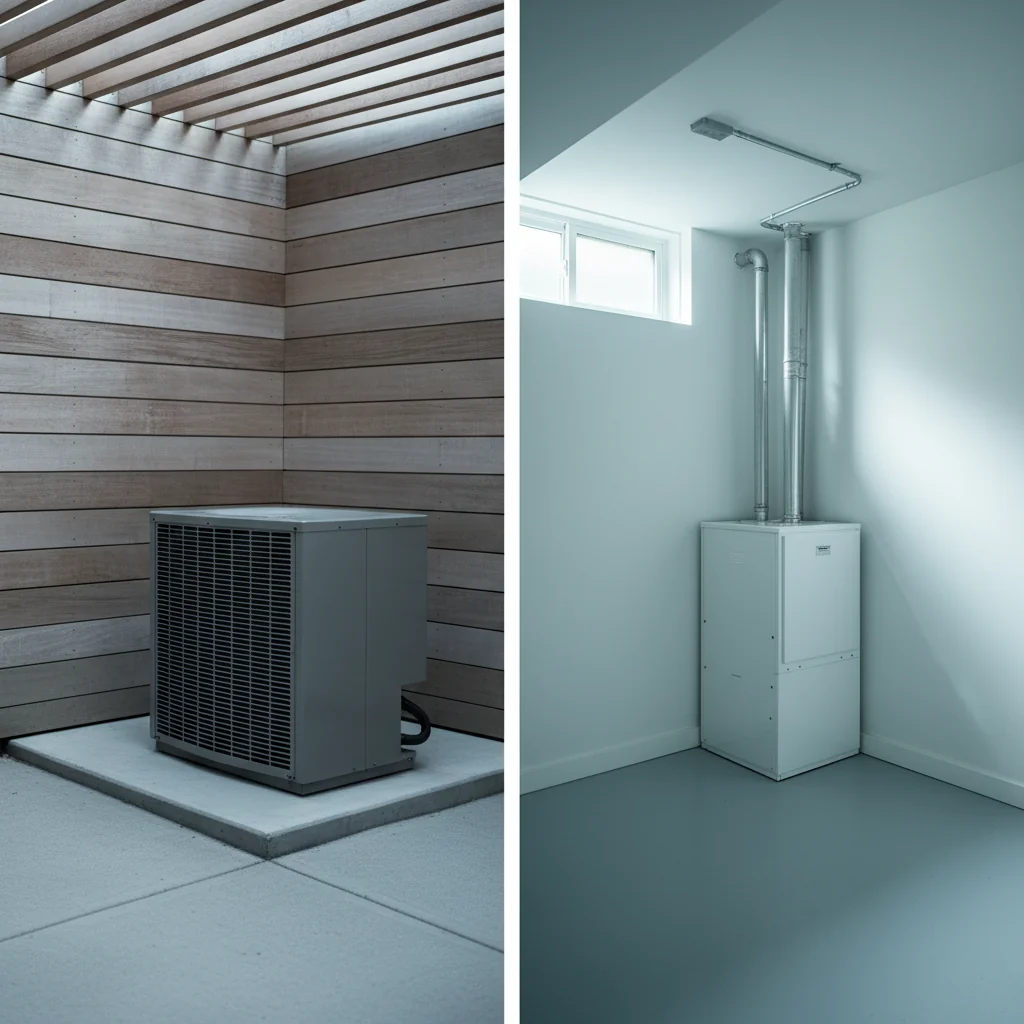
The question "Should I switch from a gas furnace to a heat pump?" has become one of the most common home improvement questions in America. With heat pump technology improving rapidly, IRA rebates offering up to $8,000, and natural gas prices fluctuating, the math has changed dramatically in the last few years.
But the answer isn't the same everywhere. Your state's energy prices are the single biggest factor in determining whether a heat pump will save you money. Let's break it down.
How the Cost Comparison Works
The core comparison is simple: a gas furnace burns natural gas to create heat, while a heat pump uses electricity to move heat from outdoor air into your home. The key variables are:
- Natural gas price ($/therm) — varies by state from $0.80 to $2.00+
- Electricity price ($/kWh) — varies by state from $0.11 to $0.40+
- Furnace efficiency (AFUE) — typically 80% for standard, 96% for high-efficiency
- Heat pump efficiency (COP/HSPF) — typically 2.5-3.0 for standard, 3.0-4.0 for cold-climate models
- Climate zone — heat pump efficiency decreases in colder climates
Where Heat Pumps Win
Heat pumps are the cheaper option in states with a favorable electricity-to-gas price ratio. When electricity is cheap relative to gas, the heat pump's efficiency advantage (COP 2.5-3.0 vs. furnace efficiency of 80-96%) makes it the clear winner.
States where heat pumps typically cost less to operate:
| State | Electricity | Natural Gas | Heat Pump Advantage |
|---|---|---|---|
| Washington | $0.115/kWh | $1.25/therm | ~40% cheaper |
| Idaho | $0.119/kWh | $1.05/therm | ~30% cheaper |
| Utah | $0.117/kWh | $0.90/therm | ~25% cheaper |
| Oregon | $0.127/kWh | $1.20/therm | ~30% cheaper |
| North Carolina | $0.132/kWh | $1.25/therm | ~25% cheaper |
Source: U.S. Energy Information Administration, residential prices
Where Gas Furnaces Win
In states with expensive electricity and cheap natural gas, the furnace holds the advantage. This is especially true in cold climates where heat pump efficiency drops.
States where gas furnaces typically cost less to operate:
| State | Electricity | Natural Gas | Gas Furnace Advantage |
|---|---|---|---|
| Connecticut | $0.269/kWh | $1.65/therm | ~35% cheaper |
| Massachusetts | $0.275/kWh | $1.70/therm | ~30% cheaper |
| California | $0.296/kWh | $1.65/therm | ~40% cheaper |
| New York | $0.225/kWh | $1.40/therm | ~25% cheaper |
| Rhode Island | $0.270/kWh | $1.60/therm | ~30% cheaper |
Source: U.S. Energy Information Administration, residential prices
The Cold Climate Factor
Traditional heat pumps lose efficiency as outdoor temperatures drop below 40°F. In climate zones 5-7 (Chicago, Minneapolis, Denver), a standard heat pump's COP can drop from 3.0 to 1.5 or lower in the coldest months.
However, cold climate heat pumps (also called "hyper-heat" or "low-ambient" models) have changed this equation. Models from Mitsubishi, Daikin, and Bosch can maintain COP 2.0+ even at -13°F. These units cost more upfront but make heat pumps viable even in Minnesota and Vermont.
What About Rebates?
The Inflation Reduction Act's HEAR (Home Efficiency Rebates) program offers up to $8,000 for heat pump installations for qualifying households. This can dramatically change the payback period:
- Without rebates: A heat pump system costs $4,000-$8,000 more than a gas furnace
- With HEAR rebates: The upfront cost difference can shrink to $0-$2,000
- With state + federal incentives: Some homeowners can install a heat pump for less than a gas furnace
Check your eligibility at Rewiring America's IRA Calculator.
The Bottom Line
There's no universal answer. The cheapest heating system depends on your state's energy prices, your climate zone, and available rebates. Use our free heating cost calculator to get a personalized comparison based on your specific situation.
General rules of thumb:
- If electricity is under $0.14/kWh and gas is over $1.00/therm: Heat pump likely wins
- If electricity is over $0.20/kWh and gas is under $1.00/therm: Gas furnace likely wins
- In between: It depends on climate zone and equipment efficiency — use the calculator