Two homeowners can get quotes for what looks like the same mold problem and see wildly different numbers — one at $1,800, one at $12,000. The spread isn't a scam and it isn't random. Professional mold remediation runs anywhere from about $500 for a small surface spot to $30,000+ for a structural infestation, and five specific drivers decide where your quote lands. If you know what they are, you can read a quote line by line and tell whether it's fair.
The 5 drivers that set your quote
1. Affected square footage
Area is the single biggest lever. Remediation is priced by how much surface has to be contained, cleaned, and (sometimes) rebuilt — not by how scary the mold looks. Rough national ranges the way most contractors bracket it:
| Extent of growth | Typical cost |
|---|---|
| Small surface spot (under ~10 sq ft) | $500 – $1,500 |
| Contained, single room | $1,500 – $3,500 |
| Larger or multi-surface growth | $3,500 – $9,000 |
| Severe / structural (demo + rebuild) | $10,000 – $30,000+ |
If your quote sits far above the band for your square footage, that's your first question for the contractor: what's driving it — access, severity, or a repair that isn't really "mold work"?
2. Location in the home (access difficulty)
The same 100 sq ft of mold costs more in a crawl space or attic than on an open basement wall, because the crew has to work in a tight, awkward space and haul equipment in and out. Basement remediation typically runs $2,000 – $7,000 depending on how much wall, framing, and flooring is involved. A contained bathroom job sits lower; crawl spaces and attics push higher for the same area. If two quotes differ and the mold is in a hard-to-reach spot, access is usually the reason.
3. Severity — and the black-mold myth
Severity is about how deep the mold has gone, not its color. Surface growth that wipes off is cosmetic. Once mold is into drywall, insulation, or framing, those materials have to be removed, treated, and rebuilt — which is what turns a $2,000 job into a $9,000 one. Toxic or structural cases go higher still.
Here's the part that saves people money: "black mold" (Stachybotrys) does not carry a species premium. Remediation is priced by area, access, and material damage — a contained black-mold job in a bathroom or basement usually runs $2,000 – $6,000, the same as any other mold of that size. Black mold behind walls or in HVAC can reach $10,000 – $25,000+, but that's because the problem is extensive, not because of the label. If a quote is marked up "because it's black mold," push back.
4. Containment and setup
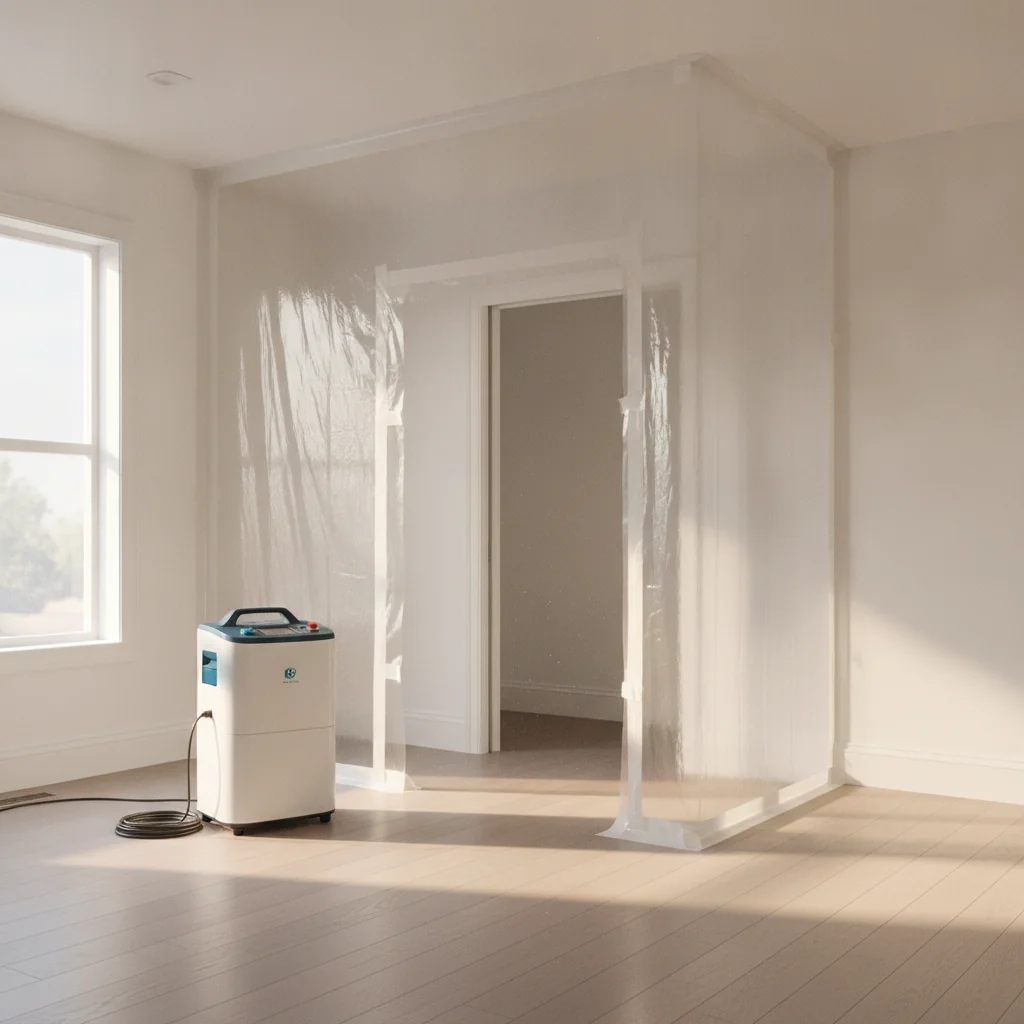
A legitimate remediation quote includes a containment line: poly-sheeting barriers, sealed openings, negative-air machines, and HEPA air scrubbers that keep spores from spreading to clean parts of the house. Bigger or higher-risk jobs need more containment, so this line grows with the job. A quote with no containment on anything beyond a tiny spot is a red flag — cutting it is how you end up re-mediating the same house twice.
5. The moisture source repair
This is where quotes legitimately diverge the most. Mold is a symptom; water is the cause. Fixing the underlying moisture — a leak, poor grading, a failed sump pump, drainage — is a separate cost from the remediation itself, and a good contractor prices it separately (or tells you to get a plumber/foundation specialist). It matters because remediation without fixing the water source will fail: the mold comes back. If one quote is much higher, check whether it includes cause-repair the cheaper one quietly left out.
What a fair quote actually itemizes
A quote worth trusting shows its work. Expect to see these line items:
- Inspection / assessment — $300 – $1,000 (most homeowners pay ~$450 – $650). Many companies credit this toward the job if you hire them.
- Containment & setup — barriers, negative air, HEPA scrubbers.
- Removal — cleaning, and demo of unsalvageable materials.
- Drying — dehumidification to get materials back to normal moisture.
- Post-remediation clearance test — $250 – $550 to verify the work succeeded. On any significant job this is worth paying for, and ideally it's done by a different company than the one that did the work.
A lump-sum quote with none of this broken out isn't necessarily overpriced — but you can't tell whether it is, which is reason enough to ask for the itemization.
How to sanity-check your own quote
Before you accept anything, put your actual numbers — affected square footage, where the mold is, and how severe it is — into our mold remediation cost calculator. It estimates the job the same way contractors bracket it (by area, location access, and severity, adjusted for your state's labor costs) and returns an itemized range. Then compare:
- Is the quote inside the calculator's range for your inputs? If it's far above, ask which driver accounts for the gap.
- Does it separate the mold work from the moisture repair? Those are two jobs.
- Does it include containment and a clearance test on anything beyond a small spot?
- Get a second estimate whenever the number crosses a few thousand dollars — the spread between honest contractors on the same job is real, and a second opinion is cheaper than an overpayment.
One more thing worth knowing before you file anything: homeowners insurance generally covers mold only when it results from a sudden, covered event (like a burst pipe) — not long-term humidity or a leak you left unaddressed. Don't assume the quote will be reimbursed.
The bottom line
A mold quote isn't a single price — it's five decisions stacked together: how much area, how hard to reach, how deep it's gone, how much containment, and whether the water problem gets fixed too. Price the job yourself first, make the contractor itemize, and treat any number that can't be explained by those five drivers as a number to question.
Frequently asked questions
Why is my mold quote so much higher than the online average?
Usually one of three things: the mold is in a low-access space (crawl space/attic), it has gone into structural materials that must be removed and rebuilt, or the quote bundles in fixing the moisture source. Ask the contractor to point to which driver accounts for the gap — a fair quote can explain it.
Should the quote include fixing the leak or moisture problem?
It should at least address it. Remediation without fixing the water source will fail. Some remediation companies handle minor repairs; bigger issues (foundation drainage, roof, plumbing) may need a separate trade. What you don't want is a quote that ignores the cause entirely.
Is a paid mold inspection worth it before remediation?
For anything beyond an obvious small spot, yes — a $300–$1,000 inspection defines the real scope so you're not paying a contractor to guess, and many companies credit the fee toward the job. A separate post-job clearance test ($250–$550) is how you confirm you actually got what you paid for.