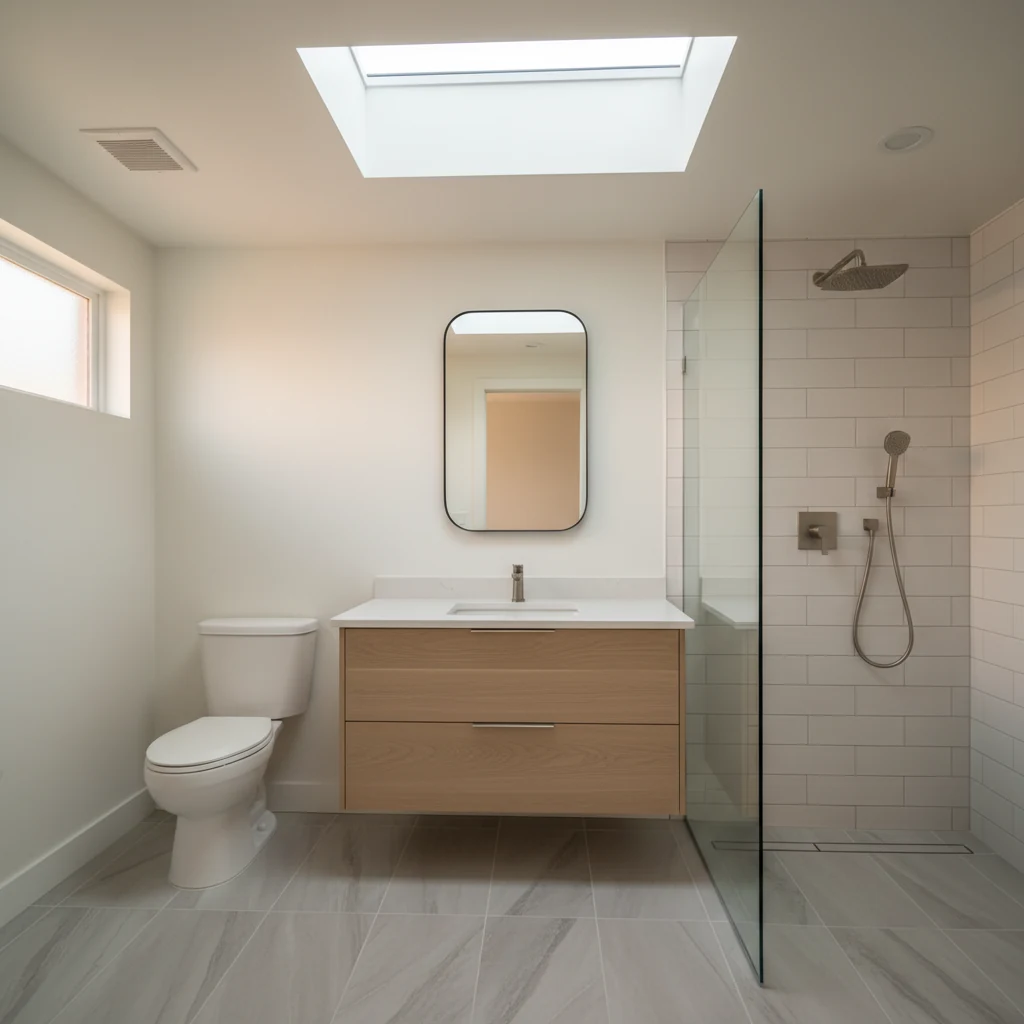
Bathrooms are small rooms with concentrated trades — plumbing, electrical, tile, glass, ventilation, waterproofing, and finishing all stacked into 40 to 100 square feet. That density is why bathroom remodels routinely run 25–50% over their initial bids. Three composite projects below — a primary-bath gut, a powder-room "refresh," and a same-time two-bath job — average a 47% overrun. The same five mistakes appear in all three.
This is the version of the story where you find out the supply lines are 1950s galvanized, the tile pattern multiplies the labor, and the bath fan was venting into the attic for fifteen years. The cost numbers are real-world. The patterns repeat enough to plan around.
Story 1: The Master Bath Gut — Hartford, CT ($18K → $26K, +44%)
The Olsens (composite) had a 95-square-foot primary bathroom in a 1985 colonial: builder-grade fiberglass tub-shower combo, single oak vanity, vinyl floor, no exhaust fan that actually worked. They wanted a full gut — convert to a walk-in shower with a glass enclosure, replace the vanity with a 48" floating one, large-format porcelain on the floor, subway tile in the shower. Initial bid: $18,000 across four weeks. Final: $26,000 across seven.
Where it broke:
- Drain stack relocation (+$2,400). Converting tub-to-shower changed the drain location by 14 inches. The 3" cast-iron stack ran inside the wall behind it; relocating the trap meant cutting the stack and adding a hub fitting. A plumber's day plus city inspection.
- Tile pattern labor multiplier (+$1,800). They selected a vertical-stack subway pattern (each row offset by half a tile) for the shower. The pattern itself isn't expensive in materials — but the labor estimate had been done assuming a standard running bond. Vertical stack with a continuous grout line is roughly 1.5× the labor of horizontal running bond, partly because perfect vertical alignment is harder than offset.
- Vanity-cabinet category drift (+$1,200). The "floating 48"" they specced was a stock IKEA-tier unit. Once they saw the soft-close hardware quality, they upgraded to a semi-custom unit. Real cost difference plus restocking the rejected unit.
- Bathroom outlet/circuit code update (+$900). Connecticut's adoption of the 2023 NEC required a dedicated 20A circuit for the new vanity outlet plus AFCI/GFCI protection that the existing wiring couldn't support. The whole bathroom got pulled to a new home-run from the panel.
- Old subfloor failure (+$1,400). When demo exposed the subfloor under the tub, two joist bays had moisture damage from a slow shower-pan leak that pre-dated the Olsens' ownership. Sister-joists, new subfloor, and an extra day of labor.
What they'd do differently: ask the contractor to quote demo + plumbing-and-electrical inspection as a separate phase. Confirm code requirements with a permit walk-through before pricing. Pick tile patterns with the install labor explicit on the quote.
Story 2: The Powder-Room "Refresh" — Plano, TX ($7K → $13K, +86%)
The Wallaces (composite) wanted a small powder-room update in a 1992 builder-tract home: new vanity, new toilet, new floor tile, new mirror and lighting, a fresh paint job. No layout changes, no shower involved. The contractor bid $7,000 — "easy three-day job." It became a $13,000 job over seven weeks.
- Galvanized-pipe failure (+$2,800). When the plumber loosened the supply lines under the existing vanity, the elbow on the cold-water side cracked clean off — interior corrosion had eaten 80% of the wall thickness. That was a hint to inspect the rest. Both supply runs from the basement to the powder room were galvanized and visibly rusting. Replacing them in PEX was cheap; opening the wall to do it added drywall and paint work.
- Subfloor structural concern (+$1,100). When the old vinyl came up, the plywood underlayment had a soft spot near the toilet flange. Cause: a slow wax-ring leak across roughly six years. Patch the subfloor, replace the flange, reseat the toilet.
- Hidden mold around toilet flange (+$700). Same root cause. Mold treatment, sealing, and an extra disposal trip.
- Contractor walkout mid-project (+$1,200 to finish). Halfway through, the original contractor accepted a larger commercial job and stopped returning calls. The Wallaces hired a second contractor at a 20% premium to finish out — partly because the second one had to verify the work the first had done.
- Higher-grade vanity selected once labor was committed (+$200). The cheapest example of the surprise stack. Once they were in for $9K, the difference between a $400 vanity and a $600 vanity stopped feeling like a real choice.
What they'd do differently: in any pre-1995 home, pressure-test the supply lines and inspect for galvanized BEFORE quoting the bath. Use a moisture meter on the subfloor before signing. Get references for the contractor and confirm they're not bidding bigger jobs simultaneously. Powder rooms look easy because they're small. They're not.
Story 3: The Two-Bath Same-Time Job — Berkeley, CA ($42K → $58K, +38%)
The Liangs (composite) decided to do their primary bath and the second-floor hall bath in the same project — same crew, same materials order, slightly better unit pricing. Initial bid: $42,000 across eight weeks. Final: $58,000 across sixteen.
- Second-story plumbing reroute (+$3,800). Their 1925 craftsman had a post-and-pier foundation with limited subfloor access. Routing the new shower drain on the second-floor bath required a creative path through joists that the original bid hadn't accounted for. Steel reinforcement plates plus a structural-engineer letter for the city permit.
- Custom glass shower enclosure delays (+$2,400 in carrying costs). The frameless glass for both showers had to be templated AFTER tile install, fabricated, and shipped. Lead time was 4 weeks longer than estimated. During that gap, the contractor's per-week supervisory fee continued and the family was using a single bathroom for the second floor.
- Recessed-light code in shower zone (+$1,200). California's adoption of the 2022 CEC required IC-rated, damp-rated fixtures for recessed lights inside the shower wet zone. The originally specced fixtures didn't qualify; they were swapped out plus the rough-in had to be reworked to accept the larger trim.
- Permit deadlines and a design change (+$2,100). Halfway through the project the city's code-inspection cycle changed; they ended up with two separate permit reviews instead of one (each $400 plus reinspection). Mid-project the Liangs also added a heated-floor system to the primary bath, which required updating the electrical permit and adding a 240V circuit.
- Tile waste on diagonal-set floor (+$1,500). They selected a 12×24 porcelain set on the diagonal in the primary bath. Diagonal layouts produce roughly 25% material waste vs. 10% for straight sets. They hadn't ordered the extra material in the original calculation.
What they'd do differently: separate the two bathrooms into two project phases. Doing both at once turned out NOT to be a cost saver because each bathroom hit its own surprise category and the second-bath surprises wouldn't have been priced into the first-bath quote anyway. Order glass templating to start before tile completes (impossible — but the lead time should be flagged in the schedule). Confirm code requirements per fixture before selecting fixtures.
The 5 Most Common Bathroom-Remodel Lessons, by Cost Impact
Three projects in three regions, three different scopes, the same five categories of surprise. In rough order of frequency and cost impact:
| Lesson | Typical cost impact | How to avoid it |
|---|---|---|
| 1. The wet-wall surprise (galvanized pipe, mold, rot) | $1,500–$5,000 | In any pre-1995 home, pressure-test the supply lines and moisture-meter the subfloor before quoting. Demo a discovery hole if needed. |
| 2. Tile pattern labor multipliers | $1,000–$4,000 | Get install labor quoted by pattern, not just by square foot. Diagonal, herringbone, mosaic, vertical-stack, and pebble all run 1.3–2.5× standard labor. |
| 3. Plumbing relocation | $1,500–$5,000 | If you're moving the shower, sink, or toilet by more than 12", price the drain reroute as its own line item. Slab-cut, joist-routing, and stack relocation are NOT minor jobs. |
| 4. Code-update surprises (NEC, ventilation, IC-rated) | $500–$3,000 | Pull the permit before quoting. Modern bath remodels almost always require AFCI/GFCI updates, dedicated circuits, IC-rated fixtures in wet zones, and a properly vented bath fan to exterior — not the attic. |
| 5. Vanity / glass / fixture lead-time creep | $800–$4,000 carrying costs | Confirm lead times before ordering and build them into the schedule. Frameless glass requires post-tile templating; semi-custom vanities often run 6–10 weeks. |
Sources: 2024 Remodeling Cost vs. Value Report; National Kitchen & Bath Association (NKBA) survey data; r/HomeImprovement and r/Renovations cost-overrun threads (n > 200); BLS construction-wage data; recent NEC and CEC code adoption schedules.
What Realistic Bathroom Pricing Looks Like
The 2024 Remodeling Cost vs. Value Report puts a national-average mid-range bathroom remodel at roughly $27,164 with a 71.0% cost recovery at resale; a universal-design bath addition is closer to $112,000. A mid-range powder-room refresh runs $5,000–$10,000 if nothing surprises behind the wall, and $9,000–$15,000 once the first thing does.
If your contractor's bid for a "primary bath remodel" is $12,000, you're looking at a vanity-and-paint refresh — not a shower-conversion gut. The two are different products at different price points and they both deserve to be called what they are.
For a sanity check on the bid you have, run your specs through our free bathroom remodel cost calculator — it uses regional labor and material indices to estimate what a comparable project should run in your zip code, broken out by line item. If the contractor's bid is more than 15% below the calculator's estimate, the gap is almost always a category of work that isn't in the bid yet.
Three Things to Do Before You Sign
- Set a 25–30% contingency. Bathrooms run higher than kitchens on percentage overruns because the trade density is higher and the reveal-during-demo rate is higher. Plan for it.
- Pressure-test and moisture-meter the existing space before quoting. A $200 plumber visit during quoting saves $3,000 in mid-project surprises.
- Pull the permit and confirm code requirements before specifying fixtures. Code-required IC-rated lighting, AFCI/GFCI circuits, and exterior-vented fans are not negotiable, and they affect what fixtures you can actually use.
Bathrooms are unforgiving rooms — wet, small, and full of trades. The overrun pattern isn't bad luck; it's structural. The lesson from these three composites isn't "don't remodel." It's "budget for what's actually in the project."