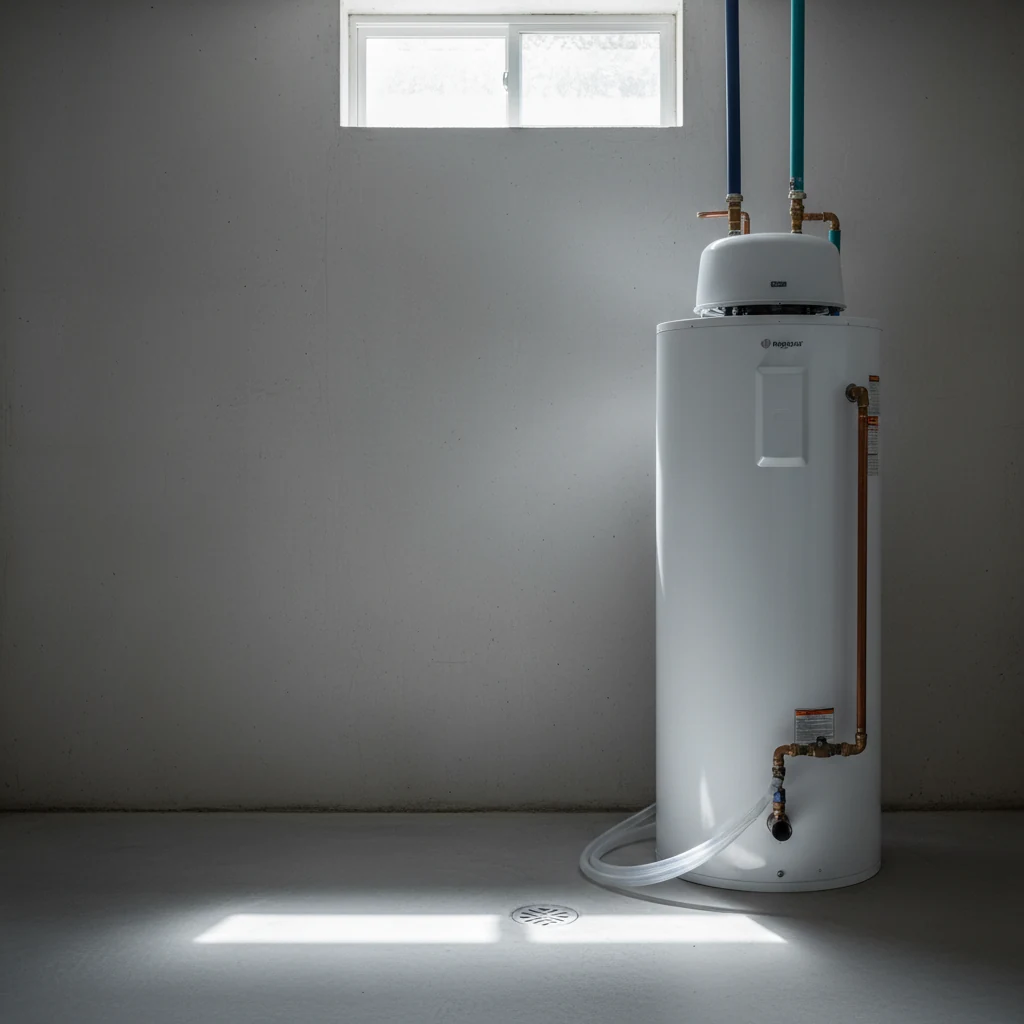
Twelve months ago, a homeowner replacing an electric tank with a heat pump water heater could stack the federal 25C tax credit ($2,000) with a state HEAR rebate ($1,750) and walk away with a hybrid unit that cost less than a conventional electric tank from day one. That stack is gone. The 25C Energy Efficient Home Improvement Credit terminated on December 31, 2025 under the One Big Beautiful Bill Act, and several large state HEAR programs ran out of funding in the first quarter of 2026.
The net result: a $1,500–$3,750 swing in the upfront math, depending on which incentives a household previously qualified for. This guide walks through what a heat pump water heater actually costs in 2026 with no federal credit and limited rebate availability, what residual incentives still exist, and which households should still buy now versus wait.
The Quick Answer
- Replacing a failing electric tank? Heat pump water heater still wins on a 5–8 year payback through operating savings alone. Buy it.
- Replacing a working gas tank? The math is hard. Without the 25C credit, you're looking at a 12–20+ year payback. Stay with gas unless you're electrifying for non-economic reasons.
- Have an income-qualified household in a state with HEAR funding remaining? Move fast. Funding is finite and several states have already paused new reservations.
- Cold garage or unconditioned utility room? Reconsider. HPWH efficiency drops sharply below 50°F ambient, which can extend payback by years.
What Just Expired
25C Energy Efficient Home Improvement Credit
The 25C credit was the workhorse incentive for heat pump water heaters from 2023 through 2025. It paid 30% of project cost up to a $2,000 annual cap for qualifying heat pump installations — including hybrid (heat pump) water heaters meeting Energy Star tier criteria. Crucially, the credit was non-refundable but had no income limit.
The One Big Beautiful Bill Act (OBBB), signed July 2025, accelerated the termination of several Inflation Reduction Act energy provisions. Per the IRS, "the Energy Efficient Home Improvement Credit is not allowed for any property placed in service after Dec. 31, 2025." Equipment installed by that date can still be claimed on a 2025 tax return; anything installed January 1, 2026 or later is not eligible.
HEAR / HEEHRA Rebates
The Home Electrification and Appliance Rebates program (HEAR, also called HEEHRA in California) was structured as a fixed federal allocation to each state, with payouts up to $1,750 per heat pump water heater for income-qualified households (under 150% of area median income). Unlike 25C, the rebate posted at point-of-sale rather than through tax filing.
The catch: the program was always finite. California's HEEHRA program announced that single-family rebates were fully reserved statewide as of February 24, 2026, with a waitlist for further submissions. Washington State's HEAR program closed to new applications on February 5, 2026. Other large states have similar reservation backlogs or pauses in early 2026. The federal program itself hasn't been repealed — but the money in many states is gone.
The 2026 Cost Math
Stripped of both the 25C credit and HEAR rebate, here's what a hybrid heat pump water heater actually costs to install in 2026.
| Component | 2026 Cost |
|---|---|
| 50–65 gallon HPWH unit (Energy Star tier) | $1,500 – $2,500 |
| Standard install labor (swap-out, no upgrades) | $700 – $1,100 |
| Dedicated 240V circuit + breaker (if not present) | $500 – $1,500 |
| Condensate drain (line + pump if no gravity drain) | $150 – $500 |
| Space modifications (clearance, makeup air vent) | $0 – $1,500 |
| Old unit removal | $75 – $200 |
| Total installed | $2,700 – $3,500 typical |
| Total installed (worst case, full upgrades) | $4,500 – $6,000 |
Typical install costs reference RemodelCostCalc's water heater calculator. Worst-case figures apply when an older home requires a panel upgrade plus a condensate pump plus closet ventilation work.
For context: a like-for-like electric tank replacement runs $1,150–$1,800 installed, and a gas tank runs $1,500–$2,200. The HPWH premium over a standard electric tank is roughly $1,200–$2,000 in a clean install, and can stretch to $3,500–$4,000 if the electrical service, condensate drain, and space all need attention.
Where the Install Premium Actually Goes
The hybrid water heater isn't fundamentally more expensive to manufacture than a standard tank — the premium comes from what surrounds it.
- Electrical: Most HPWHs draw 30 amps on a dedicated 240V circuit. Many older homes have an existing electric water heater on a 30A circuit, in which case the wiring is reusable. Homes converting from gas-tank to HPWH almost always need a new dedicated circuit run from the panel, plus a 30A breaker. If the panel is already at capacity, a subpanel or service upgrade can add $1,500–$4,000 on its own.
- Condensate drain: A hybrid water heater pulls moisture from the surrounding air. That moisture has to go somewhere. If there's a nearby floor drain or laundry standpipe, this is a $150 vinyl line. If not, you need a condensate pump and a discharge route — another $300–$500.
- Space and air volume: Heat pumps need ambient air to extract heat from. Energy Star specifies a minimum of 700–1,000 cubic feet of unconditioned air around the unit. A tight utility closet usually fails this test, requiring louvered doors or a vent to an adjoining space. Garages and basements typically have enough volume by default.
Rebates That Still Exist in 2026
The 25C and HEAR programs were the headline incentives, but they were not the only ones. A handful of smaller stacks still apply in 2026.
- State energy office programs. A few states funded HPWH rebates from sources other than the federal HEAR allocation. New York's NYS Clean Heat program, Massachusetts's MassSave, and Oregon's Energy Trust all run independent rebate pools that have not closed. Amounts range from $300 to $1,200. Check DSIRE for current state-by-state status.
- Utility rebates. Many large electric utilities offer their own HPWH rebates, separate from any federal or state program, because shifting load to off-peak heat pump water heaters helps with grid management. Typical rebates run $200–$1,000. Examples in 2026: ConEd ($1,000 in the New York metro), PG&E ($300), Xcel Energy ($400–$600 across Colorado and Minnesota), and dozens of municipal utilities. Energy Star's rebate finder is the best central index.
- Manufacturer rebates. Rheem, A.O. Smith, Bradford White, and others run rotating instant rebates of $100–$300 through plumbing wholesalers. These are usually invisible on the box but show up on installer quotes.
The realistic 2026 best case is stacking a $400–$1,000 utility rebate with a $100–$200 manufacturer rebate. That replaces, at most, about a third of the lost 25C+HEAR combination.
Updated Payback by Replacement Scenario
The right way to think about HPWH economics in 2026 is to ask: what am I replacing, and how long until the operating savings cover the install premium?
Replacing an existing electric tank
This is the cleanest math. A standard electric tank consumes roughly 4,800 kWh per year for a family of four; a hybrid runs at about 1,500 kWh. At a $0.16/kWh national average residential rate, the annual saving is around $300–$500.
| Scenario | HPWH Premium | Annual Savings | Payback |
|---|---|---|---|
| Mild climate, existing 240V circuit reusable | $1,200 | $400 | 3.0 years |
| Mild climate, new circuit required | $2,400 | $400 | 6.0 years |
| Cold climate basement, existing circuit | $1,500 | $250 | 6.0 years |
| Cold climate, panel upgrade required | $4,000 | $250 | 16.0 years |
Under most electric-replacement scenarios, payback still falls within the 13-year average lifespan of a hybrid unit. The math holds without any tax credit.
Replacing an existing gas tank
This is where 2026 reality bites. The operating-cost gap between a gas tank ($280–$480/year) and a heat pump ($210–$350/year) is much narrower than between an electric tank and a heat pump. With the credit and rebate stack gone, the math frequently doesn't pencil.
| Scenario | Net Premium vs Gas Tank | Annual Savings | Payback |
|---|---|---|---|
| Existing gas line capped, new 240V required | $2,500 | $130 | 19 years |
| Existing gas line capped, panel upgrade required | $4,500 | $130 | 35 years |
A 19-year payback exceeds the typical 13-year HPWH lifespan. Switching from a working gas tank to HPWH in 2026 is primarily an electrification or fuel-mix decision, not a financial one.
When HPWH Still Makes Sense in 2026
The 25C expiration changes the magnitude of the case, but not the case itself, for several household profiles:
- Your existing electric tank is at end-of-life. You're replacing the water heater anyway. The HPWH premium pays back in 3–6 years through operating savings alone, no incentives required.
- You live in a warm climate with garage placement. The hybrid water heater hits its rated 3.5 UEF efficiency only when ambient air is above ~50°F. Texas, Arizona, Florida, Georgia, and Southern California garages or utility rooms are the sweet spot.
- Your state still has HEAR funding. Several mid-sized state programs (Maine, Vermont, Colorado, Maryland) had remaining allocations as of mid-2026. If you qualify by income, the application is worth the hour it takes.
- You qualify for a utility rebate of $500+. Combined with manufacturer rebates, this can offset $700–$1,200 of the install — not 25C-level, but enough to compress payback by 1–2 years.
When to Skip in 2026
- Your gas tank still has life in it. Switching mid-lifespan means paying for two replacements in 10 years. The financial case for that is much weaker without the credit and rebate stack.
- Your utility room is below 50°F much of the year. A cold basement or detached garage in zones 5–7 will force the HPWH into resistive-heat mode for chunks of the winter. Real-world efficiency drops to roughly 1.5–2.0 UEF, which compresses operating savings by 40–50%.
- Your installed cost requires a panel upgrade. A $1,500–$4,000 panel upgrade kills the payback on its own. If the panel is already at capacity, it may be cheaper to replace like-for-like and address electrification at the next major remodel.
- You have 5+ people in the house. HPWHs cap at 80 gallons and switch to resistive backup under heavy simultaneous demand, which erodes the efficiency advantage. A 75-gallon gas tank often serves a large household better.
What to Do Right Now
If you're shopping in mid-2026:
- Check your state's HEAR status at Rewiring America or your state energy office. Some allocations are reopening as projects fall through.
- Pull current utility rebates via the Energy Star rebate finder. Enter your ZIP and look specifically for "heat pump water heater" or "hybrid water heater."
- Get three installer quotes and confirm the line-item breakdown. Some installers were still pricing as if the 25C credit applied through Q1 2026; the post-credit price should not be padded with phantom incentive math.
- Run the numbers for your specific scenario using the water heater cost calculator — it accounts for your state's energy rates and your existing fuel type.
For broader water heater context, the tank vs tankless cost comparison walks through how heat pump tanks stack up against tankless gas and standard tanks over 10 and 20 years. If propane is your fuel, see the propane tankless cost guide. And for whole-home electrification context, the heat pump vs gas furnace cost guide covers the same incentive-expiration math applied to space heating.
The headline is that the heat pump water heater hasn't gotten worse in 2026 — it's just gotten more expensive at the cash register. For electric-tank replacements, that still pencils. For gas-to-electric conversions without rebate help, the patient money is to wait for the next incentive cycle or to bundle the swap with a panel upgrade you were doing anyway.