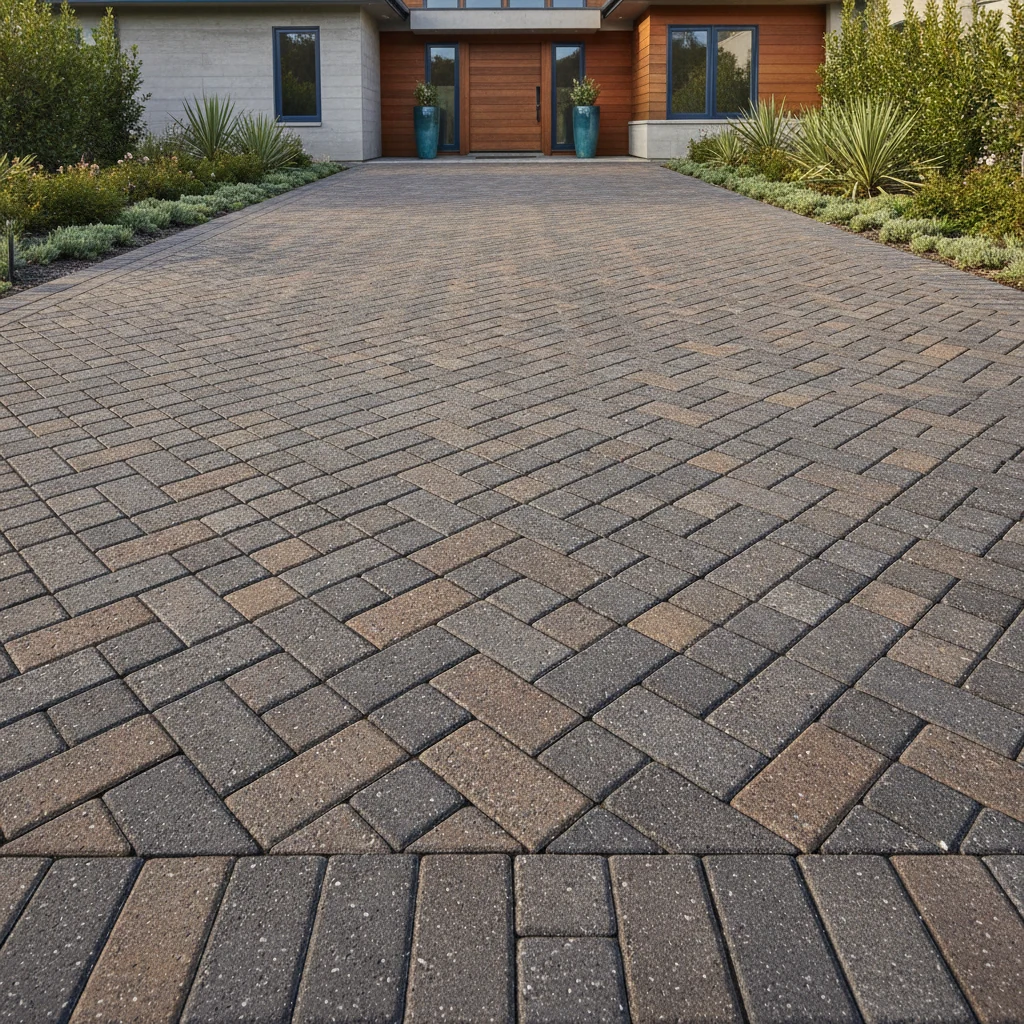
A paver driveway costs $15 to $30 per square foot installed, which puts a typical 400-square-foot driveway between $6,000 and $14,000 — national average around $7,400. But here is the number almost no contractor highlights on the quote: for a paver driveway, the pavers themselves are the small part. Labor runs 60 to 70 percent of the bill.
That single fact explains nearly everything that confuses homeowners about paver pricing — why two quotes for the same driveway can differ by thousands, why pavers are the one driveway you can realistically DIY, and why the cheapest way to lower the price is rarely "pick a cheaper paver." Once you understand the cost structure, you stop shopping for materials and start shopping for the thing that actually drives the price.
What a Paver Driveway Costs in 2026
"Paver driveway" hides a wide price range because it covers several materials. The paver you choose sets the floor; everything above that floor is mostly installation. Here is the 2026 installed cost by paver type:
| Paver Type | Installed $/sq ft | 400 sq ft Total | Best Known For |
|---|---|---|---|
| Standard concrete pavers | $15 – $25 | $6,000 – $10,000 | Lowest cost, widest color/style range |
| Permeable pavers | $15 – $40 | $6,000 – $16,000 | Drainage; possible stormwater rebates |
| Brick pavers | $18 – $35 | $7,200 – $14,000 | Classic look, very durable |
| Natural stone (bluestone, granite, travertine) | $25 – $55 | $10,000 – $22,000 | Premium appearance, highest material cost |
Installed prices reflect 2026 contractor and industry cost data; ranges assume a prepared, well-draining site. A standard 400 sq ft driveway is roughly single-car-width (about 12 ft × 33 ft). Larger 600 sq ft two-car driveways generally run $9,000 to $21,000+.
Notice what the table shows: moving from standard concrete pavers to natural stone roughly triples the material end of the cost. So material choice sets your starting point — but within any single paver type, the spread you'll see between quotes comes from labor, not from the pavers. That's the part worth understanding before you sign anything.
Why Labor Is the Biggest Line on Your Bill
Every driveway surface is some mix of materials, equipment, and labor. What makes pavers different is how they go down. Asphalt is dropped by a paving machine and rolled; poured concrete is delivered by truck and finished by a small crew in a single working session. Both are fast, equipment-driven processes — labor lands at roughly 50 percent of those projects.
Pavers are assembled by hand. A crew excavates, builds and compacts a gravel-and-sand base, then sets each unit individually, cuts borders to fit, compacts again, and sweeps in polymeric sand. There is no machine that lays a paver field. That hand work is why labor climbs to 50 to 70 percent of a paver driveway — and why most projects land at the high end, 60 to 70 percent. Pavers are simply the most labor-intensive driveway surface you can buy.
The hidden layer underneath matters more than the pavers on top. Excavation and base preparation alone run $2 to $5 per square foot, and on soft clay, recently filled, or poorly draining soil it runs higher. This is the part of the job you never see and the part a rushed crew is tempted to shortcut — which is exactly why it drives both price and longevity.
Labor is also why paver pricing has stayed elevated. Material prices have settled at roughly 25 percent above 2019 levels, but the bigger pressure is wages: the U.S. Bureau of Labor Statistics puts the median hourly wage for construction and extraction occupations at $28.63, and pay for skilled masons and hardscape installers has climbed as much as 40 percent over pre-pandemic levels. When labor is two-thirds of the job, rising labor rates move the whole quote.
Three Things the Labor Share Changes for You
Knowing labor is 60 to 70 percent isn't trivia — it changes three concrete decisions.
1. Get local quotes, and get several
Material prices are fairly consistent nationwide; labor is not. A paver driveway that costs one figure in a low-wage rural market can cost thousands more in a high-cost metro for identical pavers. Because labor is the dominant line item, paver quotes are especially sensitive to local wage rates — more so than asphalt or concrete, where materials and equipment carry more of the total. Collect at least three local bids and compare what each includes for excavation and base prep, not just the headline number.
2. DIY is genuinely on the table — here, unlike anywhere else
Pavers are the one driveway surface a determined homeowner can install without specialized equipment. You can't DIY asphalt (you need a paving machine and hot mix) or a poured concrete slab the size of a driveway (you need a finishing crew and the clock is against you). With pavers, the work is slow but accessible — and because labor is most of the cost, doing it yourself can save 40 to 50 percent of the total.
The catch is the same base prep that makes the job expensive. An under-compacted base is the number-one cause of pavers shifting, sinking, and going wavy within a couple of years. If you DIY, rent a plate compactor, build the base in thin lifts, and don't skimp on depth. Get the base wrong and the repair costs more than hiring the job out would have.
3. Your real budget lever is paver type, not "negotiating the pavers"
Because the installation cost is similar whether you lay concrete pavers or bluestone, the cleanest way to move your budget is the material tier itself — concrete pavers at the bottom, natural stone at the top. Downgrading from stone to a quality concrete paver can cut the material end dramatically while the labor stays roughly the same. If you're comparing pavers against other surfaces entirely, our guide to the cheapest driveway options ranked by cost per year shows where pavers land against gravel, asphalt, and concrete over the full life of the driveway.
The Repair Math Nobody Quotes You
The upfront price makes pavers look expensive. The repair math is where they quietly win. A paver driveway lasts 25 to 50 years or more, versus 30 to 40 for poured concrete and just 15 to 30 for asphalt. But lifespan isn't the real advantage — repairability is.
When a paver cracks or stains, you lift that unit and drop in a replacement. The fix is a service call, often a few hundred dollars. Compare that to poured surfaces: asphalt patching runs $3 to $7 per square foot, concrete repair $3 to $25 per square foot, and widespread damage on either means resurfacing or replacing the whole driveway — thousands of dollars. Pavers also flex with freeze-thaw ground movement instead of cracking, and a section over a growing tree root can be lifted, the root trimmed, the base re-leveled, and the same pavers relaid.
This is why pavers pencil out better over decades than their sticker price suggests. If you're weighing the poured-concrete alternative head to head, our concrete driveway cost guide breaks down where concrete's lower upfront price does and doesn't win.
When Pavers Are Worth the Premium
Pavers make the most sense when you plan to stay in the home long enough to bank the lifespan, when curb appeal and resale value matter, when your lot has tree roots or freeze-thaw movement that would crack a slab, or when you're willing to DIY and capture the labor savings. They make the least sense as a short-term, lowest-upfront-cost choice — that's gravel or asphalt territory, and the gravel driveway cost guide covers the budget end.
If you already know pavers are the look you want, the decision collapses to two levers: which paver tier fits your budget, and whether you hire out or DIY the labor that makes up two-thirds of the bill. Price both before you commit — the gap is bigger than most homeowners expect.
To put real numbers against your own driveway dimensions, material, and region, use our free driveway cost calculator — it estimates installed cost and annual upkeep so you can compare pavers against every other surface on the same footing.