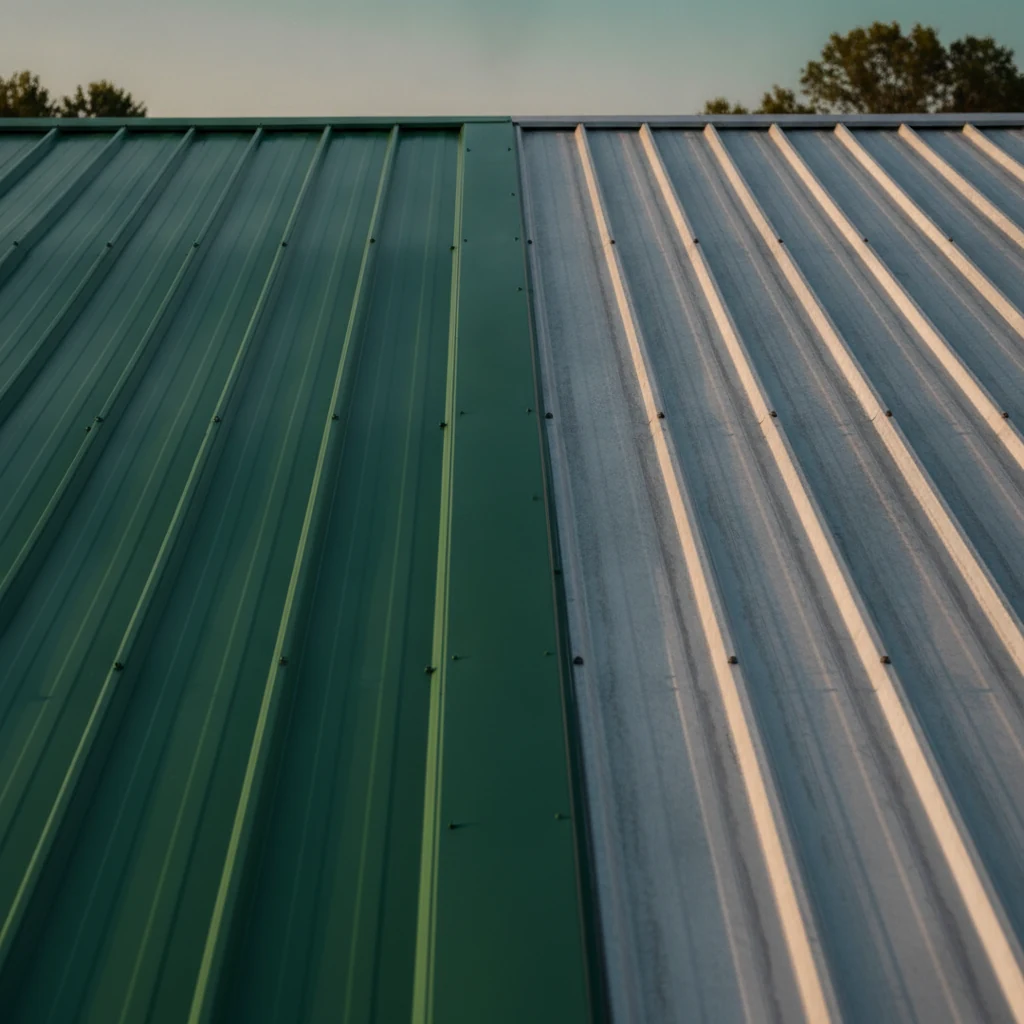
The screws are a weak reason to pay for standing seam. A screw-down metal roof does need its fasteners redone somewhere around year 15, and that job is real money, but it costs a fraction of the gap between the two quotes on your kitchen table. The premium is worth paying for other reasons, and only for some houses.
The 50-year number belongs to the panel
A metal roof is three parts that wear out at different speeds: the steel, the paint, and whatever holds the steel to the house. The lifespan in the brochure is the steel's. One 2026 cost guide puts quality steel roofing at "40 to 60 years of service life" (Roof Observations, updated January 2026), and that figure is honest for the panel itself. It says nothing about the other two parts.
The two roof types differ mainly in that third part. A screw-down roof, also sold as exposed-fastener, corrugated, R-panel or ag-panel, is pinned to the deck by screws driven straight through the face of the metal, each one sealed by a small rubber washer. A standing seam roof hides its fasteners under raised seams, and the panels are usually held by clips that let the metal slide as it heats and cools. Sheffield Metals, a coil supplier that sells both, lists "checking for fastener degradation and replacing poor fasteners" as routine upkeep for the exposed type (Sheffield Metals).
Why the screws go first
Screws fail because the roof moves and they do not. A steel panel grows and shrinks with every sunny afternoon and cold night. On a screw-down roof each panel is fixed in place at dozens of points, so that movement works on the screw holes year after year, widening them and slowly backing screws out. Meanwhile the washers sit in full sun. As that cost guide puts it, "the rubber washers can degrade due to UV exposure, leading to potential leaks if not properly maintained or replaced" (Roof Observations).
The count is what turns a small part into a real job. Installers typically use somewhere around 70 to 100 screws per 100 square feet, which puts well over a thousand holes in the roof of an average house. Roofers generally suggest an inspection every few years and expect a full re-screw, with slightly larger screws and fresh washers, somewhere between year 10 and year 20. Hot climates and dark colors land at the early end.
What the re-screw does to the math
Even a pessimistic re-screw bill leaves the screw-down roof thousands of dollars ahead. For a 1,700 square foot roof, the same guide prices exposed-fastener steel at about $8.25 per square foot installed and standing seam steel at about $12.75 (Roof Observations). Spot repairs to a handful of screws run $150 to $1,000 (Fixr); a whole-roof re-screw on an average house is commonly quoted in the low thousands, and it is sensible to budget $1,500 to $4,500.
| 1,700 sq ft roof | Screw-down | Standing seam |
|---|---|---|
| Installed cost | $14,025 | $21,675 |
| One full re-screw (around year 15) | $1,500–$4,500 | None |
| 30-year total | $15,525–$18,525 | $21,675 |
| Still ahead after 30 years | $3,150–$6,150 | — |
Installed costs: Roof Observations steel roofing guide, both with standard SMP paint. Re-screw budget is a planning range; get a local quote. Your region and roof pitch will move every line.
A second re-screw before year 30 would still not close the gap. So if a salesperson's whole case for standing seam is "you'll never have to touch the screws," you are being asked to pay roughly $7,650 to avoid a bill of a few thousand.
Where standing seam earns the premium
The premium pays off when the house needs one of the things hidden fasteners make possible. There are three of them.
You will own the roof past year 30
Standing seam wins on cost per year only if someone collects the extra years. Exposed-fastener systems are commonly given 20 to 40 years of service and standing seam 40 to 70. Spread $17,000 over 30 years and the screw-down roof costs about $570 a year; spread $21,675 over 50 and standing seam costs about $430. If you expect to sell in ten years, the next owner collects that difference, and buyers rarely pay for it in full. This is the same cost-per-year logic that separates cheap driveway materials from inexpensive ones.
Your roof is low-slope or cut up
Some roofs should not have a thousand holes in them at any price. The residential building code sets a minimum slope of 3:12 for lapped metal panels without seam sealant, and allows standing seam systems down to 1/4:12 (2021 IRC, Section R905.10.2). On a shallow porch roof or a low addition, water sits longer and finds a tired washer. The same goes for roofs with many valleys, dormers and skylights, where exposed screws cluster exactly where water concentrates.
You are comparing the same steel and paint
A good share of a typical quote gap is thicker steel and better paint, which you can buy separately from the seam. Screw-down panels are usually thin 29 or 26 gauge steel with SMP paint; standing seam is usually 24 or 26 gauge and often comes with PVDF paint (sold as Kynar 500). The cost guide's own tables assume SMP on both and note that moving to PVDF adds 10 to 25 percent (Roof Observations). Ask for a 26 gauge screw-down price before you conclude the hidden fastener is what you are paying for.
The paint clock nobody mentions
The finish, not the fastener, is the part of a metal roof most likely to disappoint you while the roof is still watertight. Both paint types carry long warranties against peeling, but the fade coverage is where they split.
| What is covered | SMP paint | PVDF paint |
|---|---|---|
| Cracking, chipping, peeling | Up to 40 years | Up to 40 years |
| Chalking and fading | Shorter, varies by color | 30 years on Sheffield's warranty |
| Galvalume steel underneath | 25 years, 6 months | |
Source: Sheffield Metals, Metal Roof Paint Warranties in Simple Terms. Other manufacturers' terms differ; read the warranty for the exact coil you are buying.
Two things follow from that table. First, a "40-year warranty" on an SMP screw-down roof is a promise that the paint will stay attached, with a shorter promise about how it will look. Second, these are warranties on the coil. A weathertight warranty that covers leaks is a separate document, and the screws and the workmanship are your installer's responsibility. Get the installer's labor warranty in writing and check its length against the year-15 re-screw.
Five questions to put to both bidders
Most of the confusion in metal roof quotes disappears when both bids answer the same questions. Our guide to comparing contractor quotes covers the general method; these are the metal-specific ones.
- What gauge is the steel? A 29 gauge price against a 24 gauge price is two different products.
- Is the paint SMP or PVDF, and how many years of fade coverage does my color get?
- For screw-down: what do you charge today for a full re-screw of this roof? A contractor who installs these roofs will have a number. Write it on the quote.
- For standing seam: clips or a nail flange? Clip systems let long panels move; nail-flange panels are cheaper and are fixed along one edge.
- What does your own labor warranty cover, and for how long?
If you already own a screw-down roof
An older screw-down roof usually needs fasteners, not replacement. From the ground or a ladder at the eave, look for screws sitting proud of the panel, washers that are cracked or squeezed out to one side, and rust rings around screw heads. Indoors, look for stains that follow straight lines along the framing. If you see them on a roof that is 12 to 20 years old with sound paint, a re-screw is the repair to price first. Leave walking the roof to the contractor; painted metal is slick and thin panels dent.
If the roof work will disturb the eaves, it is also the cheapest moment to deal with what hangs off them, since gutter replacement quotes often turn on the fascia boards behind the old gutters.
To see how either metal quote stacks up against shingles for your state and roof pitch, open the roof replacement cost calculator. It carries one metal line, so type your quoted price per square into the price field for metal, once for each bid, and compare the totals. On a simple, steep gable roof you plan to own for 15 years, the screw-down quote plus a re-screw budget is usually the better buy. On a low-slope or complicated roof, or a house you intend to keep for good, pay for the seam.