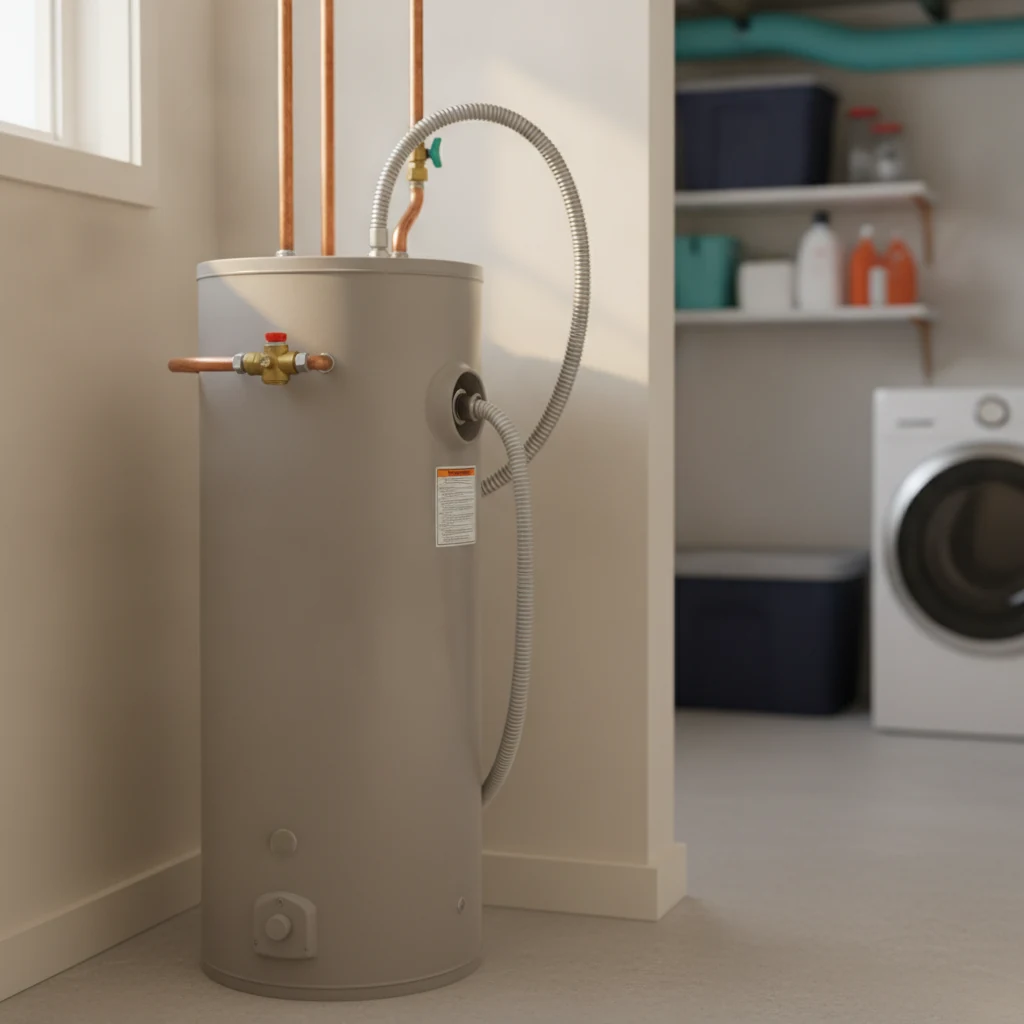
The number that decides whether you fix or replace a failing water heater is not the repair quote. Most single water heater repairs land between $150 and $550, and a national-average repair runs about $500 to $615 — well under half the cost of a new installed unit. Because almost every individual repair is cheaper than replacing, the price alone almost never tells you to walk away. What actually decides it is the tank's age. A $350 repair is smart on a 5-year-old heater and a waste of money on an 11-year-old one, even though the invoice is identical.
This guide gives you the 2026 repair cost for every common part, then the one rule that turns those numbers into a decision: repair when the fix costs less than half of a replacement and the tank has real life left; replace when it doesn't. Below, a repair-by-age matrix tells you exactly which side of that line each failure falls on.
2026 Water Heater Repair Costs, by Part
Here is what the common repairs on a residential storage tank water heater cost in 2026, parts and labor combined. The part itself is usually cheap; most of the number is the plumber's time.
| Repair | Typical installed cost | What fails |
|---|---|---|
| Thermostat (electric) | $150–$285 | Water too hot or not hot enough; part is only $20–$65. |
| Heating element (electric) | $200–$300 | No hot water or slow recovery; most electric tanks have two. |
| Anode rod | $150–$350 | Preventive — a fresh rod stops the tank rusting from the inside. |
| Temperature & pressure (T&P) valve | $50–$350 | Safety valve leaking or venting; never skip this one. |
| Thermocouple (gas) | $100–$325 | Pilot won't stay lit; the part is only $5–$25. |
| Pilot light / igniter (gas) | $75–$450 | Won't ignite; ranges from a cleaning to a control-board part. |
| Dip tube | $150–$400 | Lukewarm water at the tap from cold-water mixing. |
| Gas control valve (gas) | $300–$550 | The expensive one; part alone is $100–$300. |
| Leaking tank (from the body) | Not repairable | The steel tank has corroded through — replacement only. |
| National average repair | ~$500–$615 | Typical full range $90–$1,800. |
Source: 2026 contractor pricing surveys (HomeGuide, Angi) and manufacturer service guidance (Rheem), cross-checked across regional plumbing-company rate sheets. Labor rates drive the spread; parts are a small share of each figure.
Why the Repair Price Is Rarely the Deciding Factor
A new storage tank water heater, installed, runs roughly $1,200 to $2,500 for a standard 40–50 gallon gas or electric unit. The industry rule of thumb — repair only if the fix costs less than 50% of a replacement — puts the break-even line at about $600 to $1,250.
Now look back at the table. Every single repair except a full tank replacement sits below that line. A $300 heating element, a $350 anode rod, even a $550 gas control valve all cost less than half of a new unit. So on the price test alone, almost every repair "passes." That's exactly why the price is a weak signal: it rarely says no. The 50% rule only bites when a tank needs two or three repairs at once, or when the tank itself has failed — and by then, age has usually already made the call for you.
The honest version of the rule: repair price tells you whether a fix is affordable. Tank age tells you whether it's worth it. You need both, and age is the one people skip.
The Real Rule: Repair-or-Replace by Age
A storage tank water heater lasts 8 to 12 years. A tankless unit lasts 15 to 20+. Where your tank sits in that window changes the answer for the exact same repair. Use this matrix:
| Failure (installed cost) | Under 6 years | 6–10 years | Over 10–12 years |
|---|---|---|---|
| Thermostat / element ($150–$300) | Repair | Repair | Repair only to buy time |
| Thermocouple / pilot ($75–$450) | Repair | Repair | Repair only to buy time |
| Anode rod ($150–$350) | Repair — extends tank life | Repair | Skip — replace the unit |
| T&P valve / dip tube ($50–$400) | Repair | Repair | Repair if the tank is otherwise healthy |
| Gas control valve ($300–$550) | Repair | Borderline — repair only if the tank is clean and rust-free | Replace the unit |
| Leaking tank (body) | Replace | Replace | Replace |
The pattern is the whole point. On a tank under six years old, repair nearly everything — you're protecting years of remaining life for a few hundred dollars. In the 6–10 window, keep repairing the cheap stuff but get cautious on the expensive gas control valve, because you may only buy a year or two before something else goes. Past ten years, stop investing: do a $150 patch only if you need hot water this week and can't replace immediately, and otherwise put that money toward a new unit that comes with a fresh 6–12 year warranty.
The Exceptions: Replace Regardless of Age
A few symptoms override the matrix. If you see any of these, replace even if the tank is young and the repair is cheap:
- Water leaking from the body or bottom of the tank. This is corrosion through the steel — it is not a repairable part, and it only gets worse. A tank leak is the one failure that is always a replacement.
- Rusty or discolored hot water that persists after flushing. Rust inside the tank means the anode rod is spent and the tank wall is next.
- Two or more failures in one visit. When a plumber finds a bad element and a leaking valve and a spent anode, the combined repair can cross the 50% line — and each fix is on borrowed time.
- A rumbling or popping tank with a climbing gas bill. Heavy sediment makes the burner work harder; on an older unit that efficiency loss can justify replacing before it dies.
The Third Option Most Guides Skip: Upgrade Instead of Replace
When the matrix points to "replace," you're not limited to dropping in the same kind of tank. A dead water heater is the cheapest moment to change fuel or technology, because you're already paying for the labor, permit, and disposal either way. Three upgrades worth pricing at that decision point:
- Storage tank → tankless. A tankless unit lasts 15–20+ years versus 8–12 for a tank, but the install is more involved. Our tankless water heater installation cost breakdown shows where the extra labor goes, and our tank vs tankless comparison runs the payback math.
- Natural gas or propane. If you're on propane or considering it, the operating-cost picture is specific — our propane tankless water heater cost guide walks through unit, install, and fuel spend so you don't upgrade into a higher monthly bill.
- Heat pump water heater. The most efficient option for many homes with the space and a nearby drain. See the heat pump water heater cost for 2026, and if you're weighing fuel types, our gas vs electric water heater cost comparison.
One 2026 note if you're replacing: the federal Section 25C tax credit that used to cover 30% of a high-efficiency water heater install (up to $600) expired for units placed in service after December 31, 2025, so don't budget around it. State and utility rebates still exist and change quarterly — check your utility before you buy.
How to Decide in Two Minutes
Before you authorize any repair, run this sequence:
- Is it leaking from the tank body? Replace. Stop here.
- How old is it? Under 6 years: repair almost anything. 6–10: repair cheap fixes, hesitate on the gas control valve. Over 10–12: replace on any major failure.
- Is the repair more than half of a new installed unit ($600–$1,250)? Replace.
- Are there two or more problems at once? Replace.
If you land on "replace," price the swap before you commit to a like-for-like tank — run your fuel type, size, and local labor rates through our water heater replacement cost calculator, which compares tank, tankless, and heat pump side by side so you can see whether the upgrade pays off.
The Bottom Line
Budget $150–$550 for most water heater repairs and about $500–$615 for an average one. But don't let the invoice make the decision. On a tank under eight years old, repair with confidence — the numbers almost always favor the fix. Past ten years, a repair is a bridge, not a fix: pay for the cheap patch only if you need hot water today, and otherwise put the money toward a replacement with a fresh warranty. And when you do replace, treat it as the one cheap chance you'll get in a decade to upgrade the fuel or the technology — not just to bolt in the same tank that just failed.
Shopping for the unit?
Popular tankless water heaters on Amazon
The install is a plumber job, but the unit itself you can buy yourself — here are well-reviewed high-output (199k BTU) gas tankless models.
As an Amazon Associate, RemodelCostCalc earns from qualifying purchases. Prices and availability are shown on Amazon.